
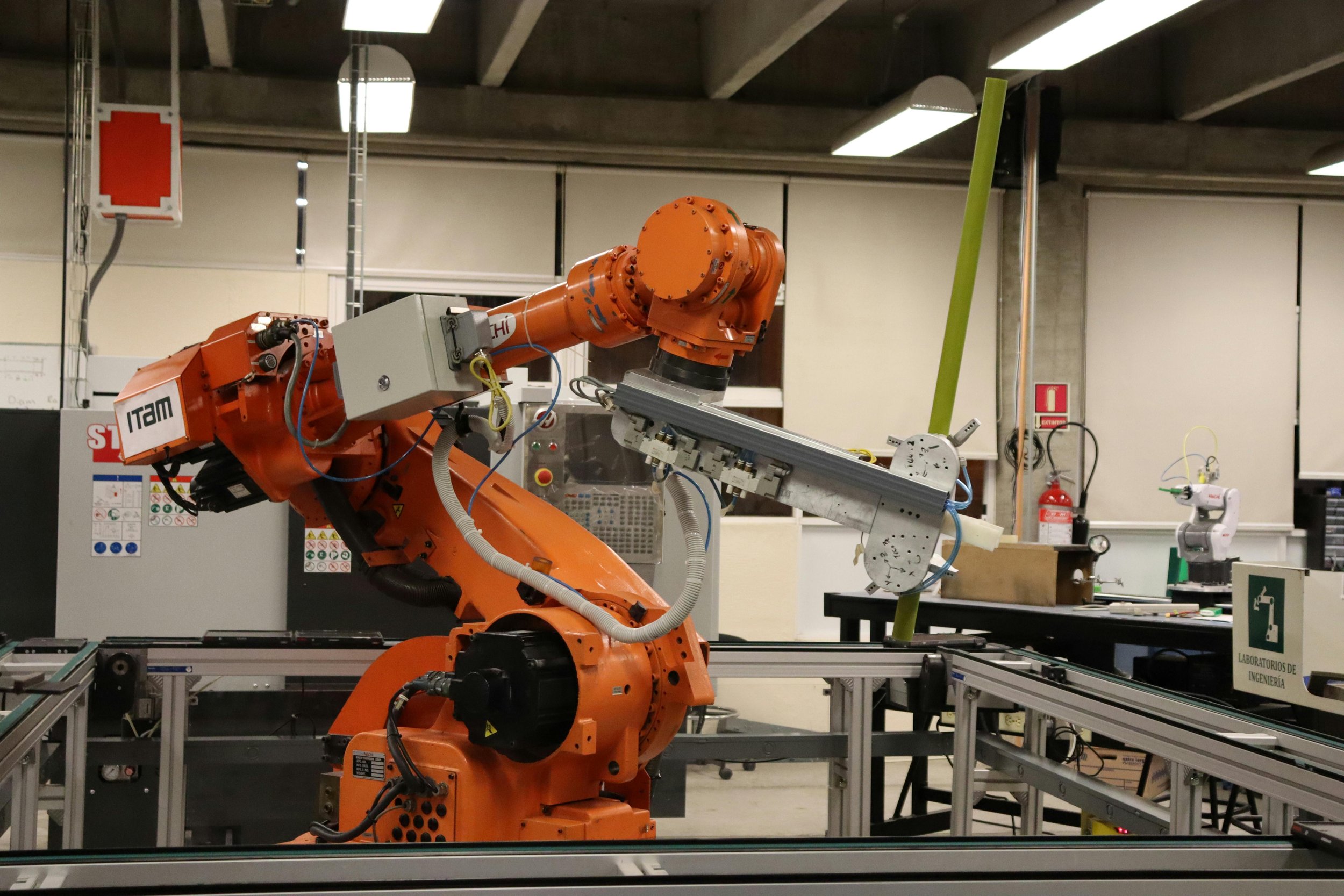
Sell Your Manufacturing Business in Illinois
From Chicagoland's precision machine shops to downstate industrial equipment builders, we help Illinois manufacturers navigate environmental compliance, property tax complexity, and high-stakes industrial exits — and get paid what the business is actually worth.
Why Illinois Manufacturers Are Prime Acquisition Targets

Illinois is the fourth-largest manufacturing state in America — home to nearly 14,000 manufacturers employing more than 724,000 workers. Cook County alone has more than 5,000 manufacturing establishments — one of the highest concentrations of any county in the United States.
From food processing on the South Side to precision machining in Elk Grove Village — the largest industrial park in North America with over 3,800 businesses — the Chicagoland ecosystem offers buyers something they cannot find anywhere else: scale, sector diversity, and logistics superiority in a single market.
Strategic buyers and PE groups target Illinois for three specific reasons:
1. The Logistics Hub: Chicago is the only city in the United States where all six Class I railroads (BNSF, Union Pacific, Norfolk Southern, CSX, CN, and CP Kansas City) converge. O'Hare handles more air cargo tonnage than any airport in North America. A manufacturer in the Chicago metro can reach 80% of the U.S. population within two days by ground freight. For buyers, acquiring an Illinois manufacturer means acquiring a logistics position that no other Midwest market can match.
2. The Industrial Diversity: Unlike Michigan (automotive) or Connecticut (aerospace), Illinois manufacturing is diversified across food processing, fabricated metals, industrial machinery, printing, plastics, and electronics. This diversity means buyers can find almost any type of manufacturer here.
3. The Elk Grove Village Effect: More than 3,800 businesses — including hundreds of precision CNC shops, metal stampers, heat treaters, and plating houses — operate within the Elk Grove Village industrial park. This supply chain density means your shop has same-day access to virtually any secondary process. Buyers acquiring here are buying into an ecosystem, not just a building — and that ecosystem premium is reflected in the multiple.
We Serve the Full Illinois Industrial Spectrum
Whether you run a precision shop in Peoria or a packaging plant in Elk Grove, we have specialized deal teams for your sector.

Food & Beverage Manufacturing (South Side, Suburbs & Downstate)
Illinois is a national leader in food and beverage manufacturing, anchored by major brands and supported by hundreds of co-packers, ingredient suppliers, and food processing equipment makers.
Who We Help: SQF and BRC-certified food co-packers, beverage producers, ingredient manufacturers, cold storage and frozen food processors, and food processing equipment builders.
The Buyer Pool: National food companies, co-packing roll-up platforms, and PE firms targeting the recession-resistant food sector.
Key Value Driver: SQF Level 3 and BRC certifications, FDA facility registrations, and USDA inspection marks. Achieving SQF certification takes 12 to 18 months and requires documented HACCP plans, allergen controls, and annual audits. Buyers acquiring your facility are buying years of food safety compliance they cannot shortcut — and established co-packing relationships with national brands that took a decade to build.

Fabricated Metals & Precision Machining (Elk Grove Village, Schaumburg & DuPage)
Chicagoland's fabricated metals sector is one of the largest in the country. The concentration of machine shops, stampers, and fabricators in the northwest suburbs — particularly Elk Grove Village — is unmatched.
Who We Help: CNC precision machine shops (3-axis through 5-axis), progressive die stamping operations, sheet metal fabricators, welding and mechanical assembly houses, and laser/waterjet cutting services.
The Buyer Pool: Industrial platform companies, Midwest PE roll-up funds, and national fabrication groups seeking a Chicago-area presence.
Key Value Driver: Customer diversification and multi-industry capability. Shops serving three or more end markets — medical, aerospace, industrial, automotive — command 1.0x to 1.5x higher EBITDA multiples than single-industry job shops. We quantify your customer concentration ratio and highlight the revenue stability that diversification creates.

Industrial Machinery & Equipment (Statewide)
Illinois has a long history of industrial equipment manufacturing — from packaging machinery to automation systems to conveyor equipment.
Who We Help: Packaging equipment OEMs, industrial automation and controls integrators, conveyor and material handling system builders, custom machinery shops, and aftermarket parts and service operations.
The Buyer Pool: Industrial conglomerates, automation-focused PE firms, and European companies seeking a U.S. manufacturing footprint.
Key Value Driver: Proprietary products and recurring service revenue. Equipment manufacturers with patented designs, documented IP, and aftermarket service contracts generating 20%+ of total revenue consistently trade at 6.0x to 8.0x EBITDA — because buyers are acquiring a recurring revenue stream, not just a project-based backlog. We isolate and highlight your recurring revenue separately in every buyer presentation.

The "Illinois Hurdles": What Makes Selling Here Different
State Tax Burden
The Problem: Illinois has one of the higher state tax burdens in the Midwest. The flat income tax rate (currently 4.95%) applies to business sale proceeds, and property taxes — especially in Cook County — are among the highest in the nation. Buyers from low-tax states sometimes discount Illinois businesses because of the ongoing cost structure.
The Solution: We quantify the offset for buyers: a Chicagoland manufacturer with O'Hare access saves $200K to $500K annually in shipping costs compared to a comparable facility in rural Indiana or downstate Illinois. We present this data alongside the tax differential to show buyers that the net operating cost favors the Chicago location. On the seller side, we work with your tax advisors to structure the transaction — asset sale vs. stock sale, installment sale under IRC 453, or Qualified Small Business Stock exclusion under Section 1202 — to minimize your personal tax exposure.
Cook County Property Tax Complexity
The Problem: If you own industrial real estate in Cook County, the property tax assessment and appeal process is notoriously complex. Buyers unfamiliar with the system may be scared off by high assessed values.
The Solution: We separate the real estate (PropCo) from the operating business (OpCo) and present buyers with a clear comparison of assessed value versus actual market value. For Cook County industrial properties, we recommend retaining the real estate and leasing it back to the buyer on a triple-net (NNN) lease — this avoids triggering a reassessment, gives you ongoing passive income, and simplifies the buyer's acquisition financing. We coordinate with Cook County property tax attorneys to ensure the structure is bulletproof.
Environmental Compliance
The Problem: Chicagoland has a long industrial history, and many manufacturing sites — particularly in older industrial areas — have environmental legacies that need to be addressed.
The Solution: We commission Phase I Environmental Site Assessments (and Phase II if warranted) before going to market. For properties with known environmental history — former plating operations, underground storage tanks, or legacy solvent contamination — we work with Illinois EPA (IEPA) remediation consultants to quantify cleanup costs and structure environmental escrows or indemnification caps. Buyers receive a clear, bounded liability picture rather than an open-ended risk — and the deal moves forward instead of dying in diligence.
How We Sell Your Illinois Manufacturing Business
Step 1: Confidential Valuation — We analyze your financials, customer contracts, equipment, and real estate using recent comparable transactions from across Chicagoland and Illinois.
Step 2: Pre-Sale Optimization — We audit your environmental compliance, Cook County property tax exposure, OSHA records, customer concentration, and quality certifications (SQF, AS9100, ISO) to eliminate deal-killing surprises before buyers see your books. Four to eight weeks of pre-sale work can add a full turn of EBITDA to your exit multiple.
Step 3: Targeted Buyer Outreach — We market your business confidentially to industrial platforms, food/beverage strategics, and PE groups actively acquiring in Illinois.
Step 4: Negotiation & LOI — We create competitive tension between qualified buyers to maximize your price and terms.
Step 5: Due Diligence & Close — We manage the full diligence process — Phase I/II environmental reports, property tax analysis, equipment appraisals, IEPA compliance verification, and contract assignments — to close in 6 to 9 months. We stay at the table through funding and close, not just through LOI.
Valuation: What Illinois Manufacturing Businesses Are Worth
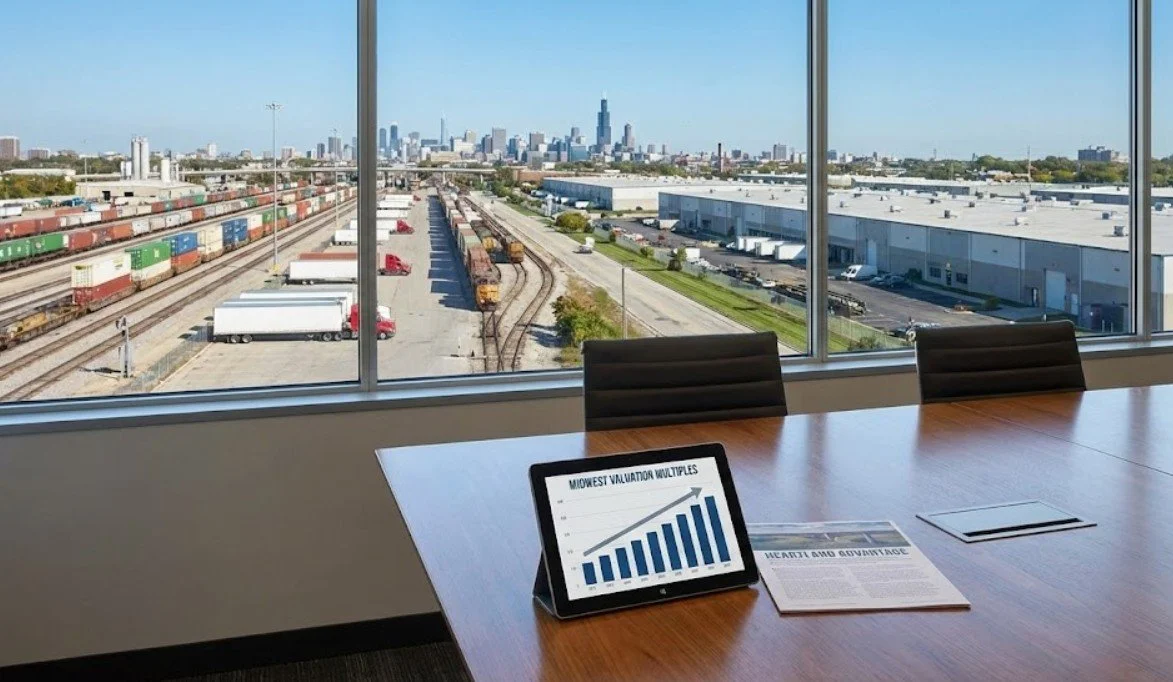
Illinois manufacturing valuations reflect a balance: higher operating costs than neighboring states, offset by unmatched logistics, customer access, and workforce depth.
The Logistics Premium: Manufacturers and distributors in Chicagoland command higher multiples than similar businesses in less connected locations because buyers value the ability to ship anywhere in the country within 2 days.
Elk Grove Village Scarcity: Industrial vacancy in Elk Grove Village and the surrounding northwest suburbs (Schaumburg, Addison, Bensenville, Wood Dale) is below 3%. Your existing facility — whether owned or leased with favorable terms — is a scarce asset. Buyers from out of state cannot simply lease comparable space and set up shop; the waiting list for quality industrial units in the northwest suburbs is measured in months.
Food Sector Resilience: Food and beverage manufacturers consistently trade at premium multiples because the sector is recession-resistant and serves essential demand.
In our experience, Chicagoland manufacturing businesses with quality certifications and diversified customer bases trade between 4.0x and 7.0x adjusted EBITDA. Food and beverage manufacturers with SQF certification and established co-packing relationships often trade at the higher end of this range.
Curious what your business would trade for? We use recent comps from closed transactions in Elk Grove Village, Schaumburg, Addison, Rockford, and Peoria — not rules of thumb and not automated calculators.
Frequently Asked Questions (Illinois)
-
A: On average, 6 to 9 months. Food and beverage businesses with complex FDA or USDA requirements may take longer.
-
A: Not if positioned correctly. While Illinois has higher taxes than Indiana or Ohio, the logistics advantages and customer access of the Chicago market create value that offsets the cost difference. We present this case clearly to buyers.
-
A: Cook County property tax is complex but manageable. We often recommend selling the business (OpCo) and retaining the building (PropCo), leasing it back to the buyer. This avoids triggering a property tax reassessment and gives you ongoing rental income.
-
A: Excellent. Elk Grove Village is the largest industrial park in North America, and industrial vacancy is extremely low. Your location within this ecosystem is a significant selling point, especially for buyers seeking proximity to suppliers, customers, and logistics infrastructure.
We Also Serve
→ Sell Your Manufacturing Business in Ohio
→ Sell Your Manufacturing Business in Indiana
→ Sell Your Manufacturing Business in Michigan
→ Sell Your Manufacturing Business in Chicago
→ Sell Your Manufacturing Business in Detroit
→ Sell Your Manufacturing Business in Dallas
→ Sell Your Manufacturing Business in Austin
Ready to Exit Your Illinois Manufacturing Business?
Don't trust your life's work to a generalist broker who sells dry cleaners and sandwich shops. You need an advisor who understands the value of an SQF certification, a Midwest logistics footprint, and the difference between a co-packer and a contract manufacturer.
We are former operators. We speak your language.