Sell Your Metal Forging Business | Specialized M&A & Valuation
You have spent decades managing the intense heat, high-tonnage pressures, and complex metallurgy of the forging industry. When it comes time to exit, you deserve an advisor who understands that your value isn't just in your machines, but in your certifications, your Tier 1 approvals, and your specialized workforce.
The 2026 M&A Landscape for Metal Forging & Die Operations
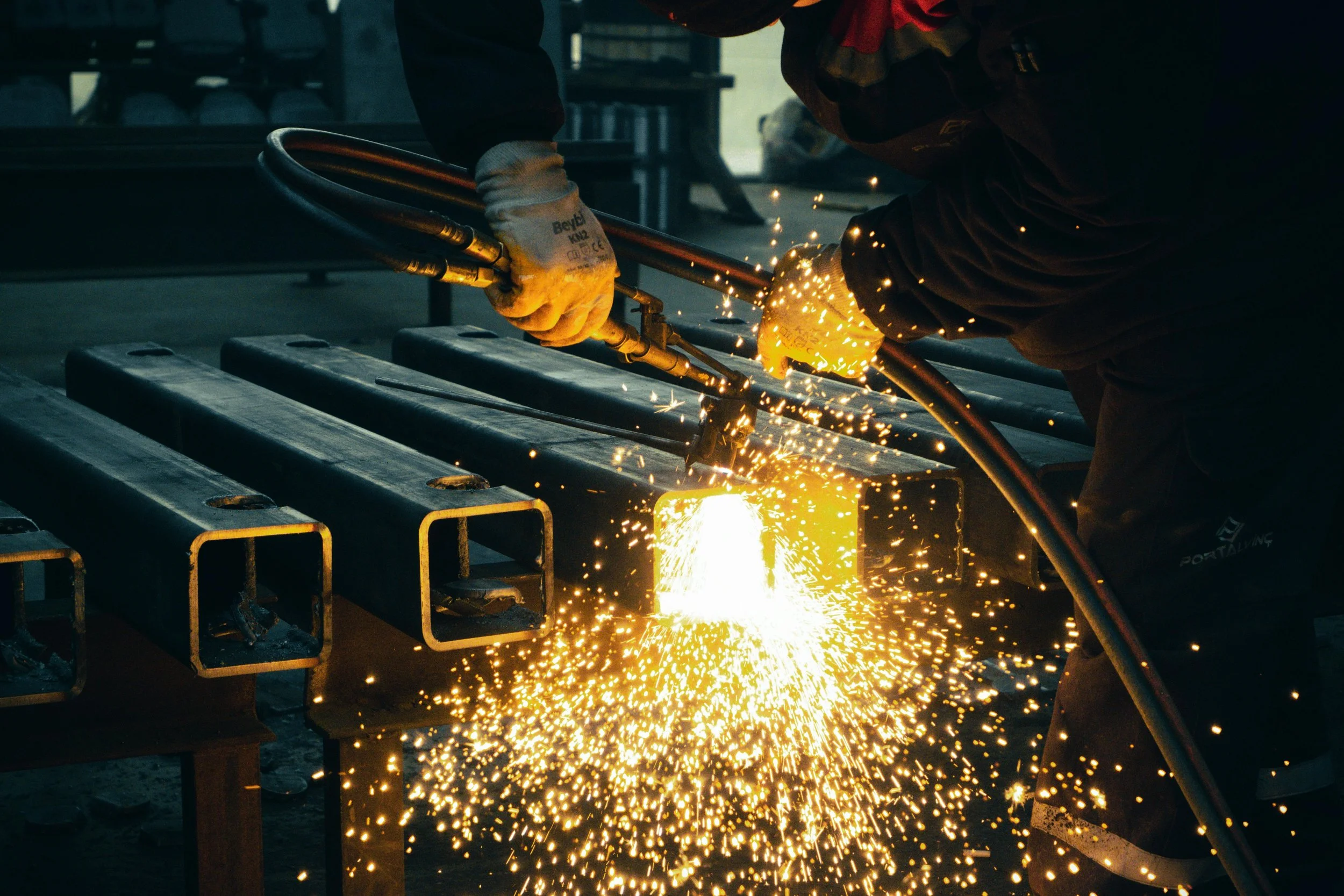
Generalist business brokers often fail to capture the true enterprise value of a forging operation because they view it as a simple "job shop." They do not understand the replacement cost of a 10,000-ton hydraulic press or the decades of proprietary thermal processing data stored in your tribal knowledge. In 2026, the market is aggressively seeking "Hard-to-Replicate" assets—firms that possess the infrastructure and compliance moats that new entrants simply cannot build from scratch.
Metallurgical Intellectual Property: Buyers are paying premiums for firms that have mastered difficult-to-forge alloys (Inconel, Titanium, Superalloys) used in next-generation aerospace and green energy.
Infrastructure Barriers: The escalating cost of CAPEX and environmental permitting makes existing, permitted forging facilities highly sought-after "plug-and-play" platforms for strategic acquirers.
Defense Backlog Strength: With global defense spending surging, operations with long-term DFARS-compliant contracts are seeing significant multiple expansion.
Technical Competencies We Represent in Metal Forging
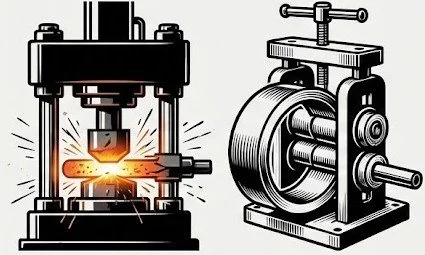
Open-Die Forging & Seamless Rolled Rings
Focus Area: Large-scale, custom structural components for energy, infrastructure, and aerospace applications.
Icon Suggestion: A heavy hydraulic press striking a glowing red billet.
Equipment & Labor: Multi-ton steam hammers, hydraulic forging presses, ring rolling mills, and "Level III" NDT technicians.
The Buyer Pool: Global industrial conglomerates and Private Equity firms looking for "Platform" investments in the energy sector.
Key Certification: ISO 9001 and API (American Petroleum Institute) Q1.
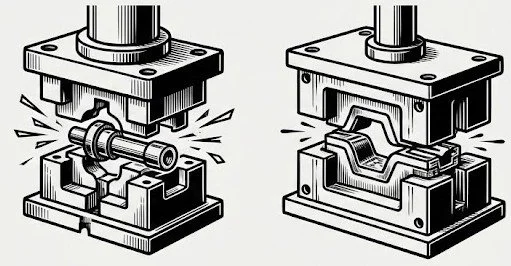
Closed-Die (Precision) Forging
Focus Area: High-volume, near-net-shape production for automotive, aerospace, and medical implants.
Icon Suggestion: A precision-machined steel die set.
Equipment & Labor: Mechanical presses, screw presses, induction heating systems, and specialized Tool & Die makers.
The Buyer Pool: Tier 1 Automotive/Aerospace suppliers seeking vertical integration of their supply chain.
Key Certification: IATF 16949 (Automotive) or AS9100D (Aerospace).
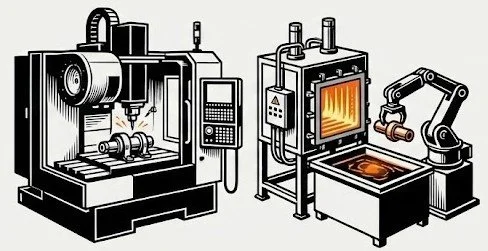
Value-Added Finishing & Heat Treatment
Focus Area: Converting raw forgings into flight-ready or assembly-ready components through internal processing.
Icon Suggestion: A CNC vertical machining center finishing a forged part.
Equipment & Labor: Multi-axis CNC mills, quench tanks, vacuum furnaces, and Metallurgists (Ph.D. or PE).
The Buyer Pool: Strategic buyers looking to capture more "margin per part" by eliminating external vendors.
Key Certification: NADCAP (Heat Treating and Non-Destructive Testing).

Navigating Industry-Specific Compliance in M&A
NADCAP (National Aerospace and Defense Contractors Accreditation Program)
The Problem: Many buyers lack the internal expertise to maintain NADCAP standards for heat treating or chemical processing. If an owner is the primary "quality champion," the deal risk increases significantly during due diligence.
The Solution: The Precision Firm conducts a "Quality Audit Readiness" review before going to market. We document your SOPs and ensure the quality management system (QMS) is institutionalized, making the certification an asset rather than a "key-man" risk.
ITAR (International Traffic in Arms Regulations)
The Problem: Selling a business with ITAR-controlled technical data requires strict adherence to DDTC (Directorate of Defense Trade Controls) regulations. A single violation during the "data room" phase can result in massive fines and deal termination.
The Solution: We utilize secure, ITAR-compliant virtual data rooms with granular access controls. We vet all potential buyers for "foreign person" status early in the process to ensure full regulatory compliance.
Environmental & EPCRA Compliance
The Problem: Forging operations are energy-intensive and often involve hazardous materials or emissions. Environmental Liability (Phase I/II audits) can stall a sale if "legacy" contamination is discovered.
The Solution: We proactively manage the environmental disclosure process, highlighting your facility's modern filtration and waste management systems to position your shop as a "clean," future-proof operation.
How We Value a Metal Forging Business
A metal forging business is valued based on its "Technical Premium," which accounts for the synergy between specialized equipment, certified processes, and long-term customer "stickiness." Unlike a general job shop that competes on price, a forging operation competes on capability and reliability.
Replacement Cost vs. Market Value: We don't just look at book value. We argue for the high cost of replicating your facility (CAPEX) and the years it takes to achieve OEM certifications, driving a higher enterprise value.
Margin Stability: Forging operations often have "locked-in" margins due to the specialized nature of the work. We highlight your ability to pass through raw material surcharges, which protects EBITDA from commodity price swings.
Revenue Quality (The Backlog): We quantify the "Program Life" of your contracts. If you are forged into a 20-year aircraft engine program, your business is valued as a high-yield annuity, not just a manufacturing shop.
Frequently Asked Questions: Selling a Metal Forging Business
-
A: Metal forging businesses are valued at a premium over general manufacturing due to the high barrier to entry created by intensive CAPEX requirements and specialized metallurgical expertise. While a general machine shop might trade at 4-5x EBITDA, a well-certified forging operation with Tier 1 contracts often commands 6-8x+ EBITDA.
-
A: NADCAP certification acts as a significant value multiplier by validating the technical competency and repeatability of critical processes like heat treating and non-destructive testing (NDT). Facilities with active NADCAP credentials command higher multiples because they are ready-made for high-margin Aerospace and Defense contracts.
-
A: Contract backlog is treated as a primary indicator of future revenue stability and is often used to justify the upper decile of EBITDA multiples during the valuation process. We provide buyers with a "Waterfall Analysis" of the backlog to prove long-term revenue visibility and reduce perceived investment risk.
-
A: Customer relationships are protected through a strictly phased disclosure process and the use of "blind" teasers that mask the identity of the seller until a qualified LOI is signed. This prevents "customer flight" and ensures that your workforce and competitors do not learn of the sale prematurely.
-
A: A typical industrial M&A exit for a forging operation requires 6 to 12 months from initial valuation to final closing. This timeline is necessary to navigate technical due diligence, environmental site assessments, and the transfer of complex quality certifications.
Ready to Maximize the Value of Your Metal Forging Business?
At The Precision Firm, we aren't just "deal makers"—we are former operators who have spent time on the shop floor. We understand the difference between a 2,000-ton hydraulic press and a 5,000-pound drop hammer. We know how to speak to the metallurgical engineers and the private equity analysts alike.
If you are ready to exit your forging business, you deserve an advisor who understands the true value of the "Technical Moat" you have built.