

Sell Your Wire & Cable Harness Business — M&A Advisory for Defense, Aerospace & Space-Grade Cable Assembly Manufacturers
Your enterprise value is not found in your assembly benches, but in your program positions and your AS9100D-certified reliability. We speak the language of mission-critical interconnects, ensuring the technical "moat" you have built is fully monetized during your exit.
The 2026 M&A Landscape for Specialty Wire & Cable
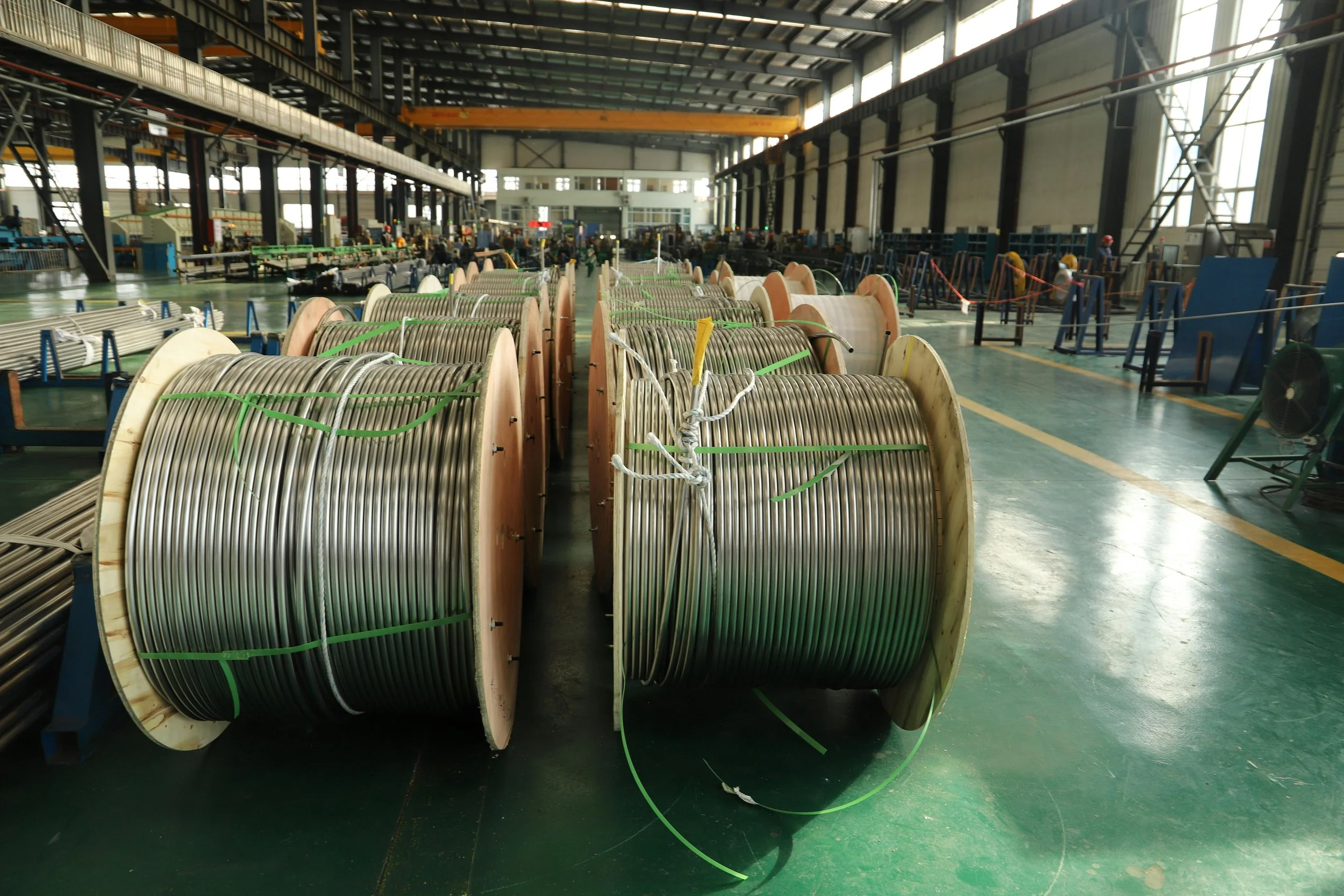
Current market dynamics are driving record valuations for harness manufacturers that can prove operational excellence and regulatory fortitude. As prime contractors consolidate their supply chains, they are aggressively acquiring Tier 2 and Tier 3 shops that possess specialized "Technical Premiums."
Program Sole-Sourcing: Buyers pay a premium for "Sole-Source" provider status on long-term platforms (e.g., F-35 or LEAP engines), as this guarantees decade-long revenue visibility.
Operational Maturity: Firms that have successfully integrated automated wire processing and "Lights-Out" crimping capabilities are seeing significant multiple expansion.
Cyber-Physical Compliance: Attaining CMMC Level 2 is no longer optional; it is a primary driver of the enterprise value in defense-heavy interconnect deals.
Technical Competencies We Represent in Wire & Cable Harnessing
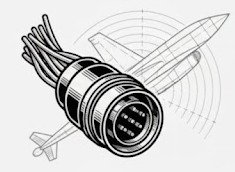
Aerospace Interconnects & Avionics
Focus Area: High-reliability (Hi-Rel) assemblies for flight control systems and engine sensors using MIL-DTL-38999 connectors.
Icon Suggestion: A technical schematic of a multi-pin circular connector with 3D wire routing.
Equipment & Labor: Laser wire markers, automated pull-testers, and IPC-A-620 Class 3 certified soldering technicians.
The Buyer Pool: Tier 1 Aerospace integrators and Private Equity firms building out defense electronics platforms.
Key Certification: AS9100D and NADCAP for AC7121 (Electronics).
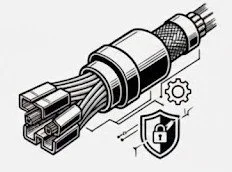
Defense-Grade Ruggedized Harnessing
Focus Area: EMI/RFI shielded cabling and overmolded assemblies designed for ground vehicle electronics and electronic warfare.
Icon Suggestion: A cross-section of a shielded cable showing braided copper layers.
Equipment & Labor: Automated braiding machines, ultrasonic welding stations, and ITAR-compliant engineering staff.
The Buyer Pool: Strategic defense contractors looking to verticalize their harness supply chain.
Key Certification: ITAR Registration and NIST 800-171/CMMC Level 2.
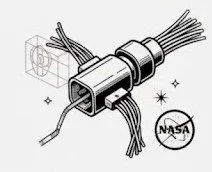
Space-Qualified Micro-Miniature Assemblies
Focus Area: Micro-D and Nano-D connector terminations for satellite systems and orbital platforms where weight and space are critical.
Icon Suggestion: A microscopic view of a 30-gauge wire termination onto a high-density connector.
Equipment & Labor: ISO Class 7 cleanrooms, micro-crimping tools, and ASQ-certified quality auditors.
The Buyer Pool: "New Space" OEMs and legacy satellite communications conglomerates.
Key Certification: NASA-STD-8739.4 and ISO 9001.

Navigating Industry-Specific Compliance in M&A
ITAR & EAR Regulatory Framework
The Problem: For Defense-related harness shops, the unauthorized transfer of technical drawings to a foreign-backed buyer can trigger massive federal fines and void the sale.
The Solution: The Precision Firm implements a "Data Segregation" protocol, ensuring that ITAR-controlled drawings are only released to vetted US-person buyers through a secure, monitored virtual data room.
IPC-WHMA-A-620 Class 3 Standards
The Problem: A buyer's technical team will audit your first-pass yields and rework logs. If your shop claims Class 3 compliance but lacks the documented operator training records, it creates a "valuation haircut."
The Solution: We perform a pre-sale "Quality Gap Analysis," framing your IPC compliance as a turnkey asset that reduces post-acquisition risk for the buyer.
Tier 1 Supplier Re-validation Risk
The Problem: Many OEM contracts contain "Change of Control" clauses that allow customers to audit or drop a supplier upon a sale, creating "revenue at risk" for the buyer.
The Solution: We proactively manage the "Consent to Assign" process, highlighting the continuity of your middle-management and quality team to satisfy OEM procurement departments.
How We Value a Specialty Wire & Cable Business

In the interconnect industry, valuation is a function of "Stickiness." A shop that can be easily replaced is a job shop; a shop integrated into a 20-year aircraft program is a strategic asset.
Regulatory Barrier to Entry: The 12-18 month lead time required for a new competitor to achieve AS9100 and ITAR registration creates a protected "cash flow runway" that buyers pay to occupy.
High Switching Costs: In the aerospace and medical sectors, the "cost of change" for an OEM is massive due to re-testing and FAA/FDA filings. This results in predictable, recurring revenue.
Asset Intensity and Validation: The combination of automated CAPEX (Komax/Schleuniger) and the "software" of the validated process creates an asset base that drives a premium EBITDA multiple.
Frequently Asked Questions: Selling a Wire & Cable Harness Business
-
A: Aerospace and Defense businesses typically command a "Technical Premium," resulting in EBITDA multiples 1.5x to 3x higher than general job shops due to high barriers to entry and long-term program stickiness. This reflects the value of the certifications and the specialized labor force that general shops lack.
-
A: AS9100 certification is a foundational value driver that validates a firm’s Quality Management System (QMS), directly increasing the buyer pool to include Tier 1 strategics and institutional private equity. Without this certification, the business is often excluded from the highest-value bidding pools.
-
A: Contract backlog is treated as a de-risking mechanism for future cash flows, where a high ratio of "Firm Orders" to "Indefinite Delivery" contracts significantly hardens the valuation floor. We break down the backlog to show buyers the "Certainty of Revenue" over a 3-to-5 year horizon.
-
A: Customer relationships are protected through a phased disclosure process, utilizing "blinded" teasers and withholding specific OEM contract details until the Confirmatory Due Diligence stage. This ensures zero disruption to the supply chain until the deal is certain.
-
A: The typical timeline for a professional M&A exit in the Aerospace sector ranges from 9 to 14 months, accounting for rigorous quality audits and regulatory filings like CFIUS if applicable. This timeline allows for a competitive bidding process among several qualified buyers.
Ready to Maximize the Value of Your Specialty Wire & Cable Business?
At The Precision Firm, we are former operators who understand the difference between a simple lead-wire and a complex, shielded mission-critical harness. We specialize in positioning technical businesses to attract the highest-quality strategic and private equity buyers globally.