

Sell Your Manufacturing Business in Chicago
From the Elk Grove Village industrial park to the O'Hare freight corridor and the south suburbs, we help Chicago manufacturers navigate Cook County tax complexity, union transitions, and high-stakes industrial exits — and get paid what the business is actually worth.
Why You Need a Chicago Business Broker Who Understands Industry
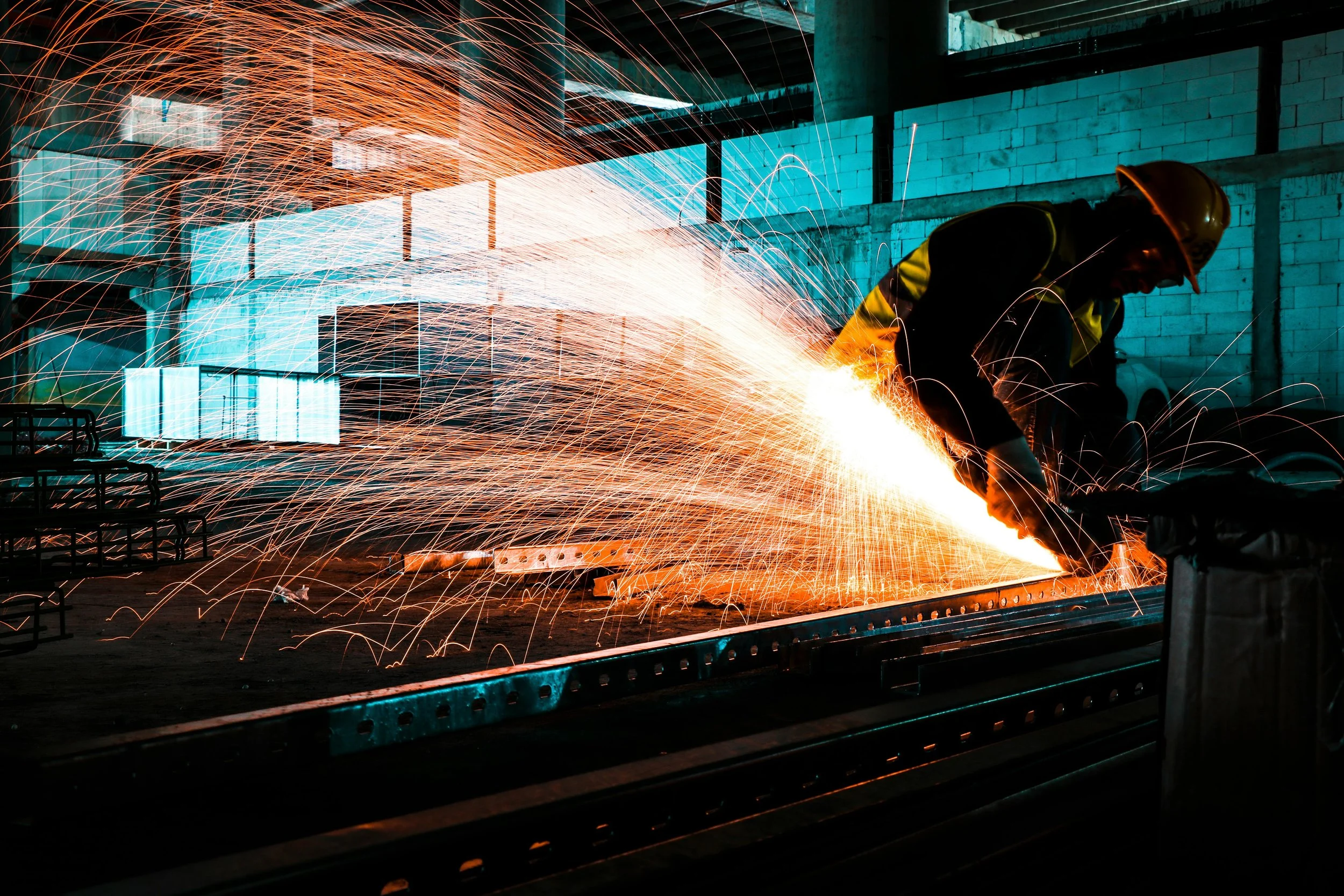
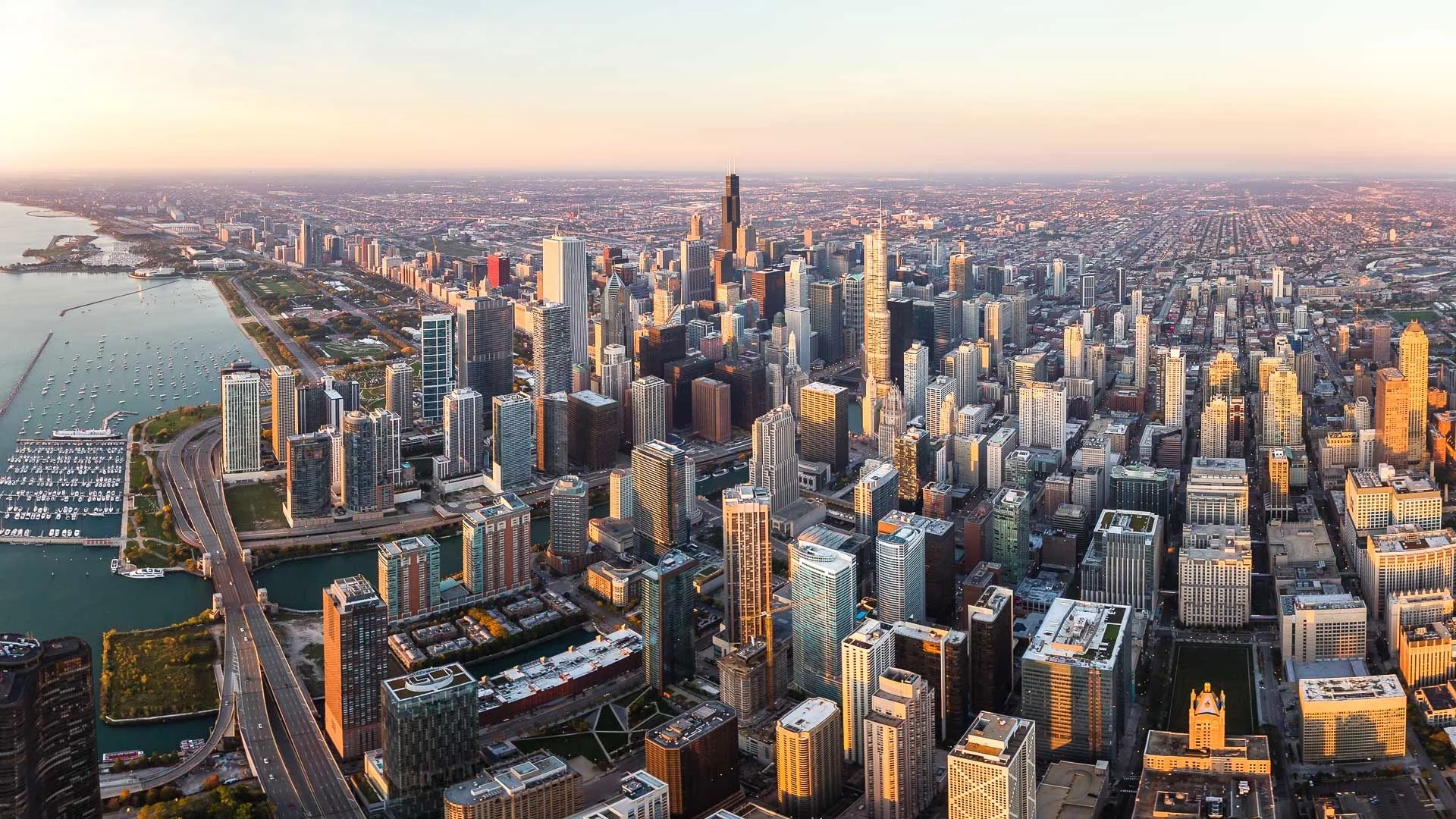
Chicago is the largest manufacturing hub in North America by employment — more than 10,000 manufacturers operate across Cook, DuPage, Kane, Lake, and Will counties, employing over 400,000 workers. This is not a market in decline. Industrial M&A activity in Chicagoland hit record levels in 2024, driven by reshoring, supply chain consolidation, and private equity platforms aggressively rolling up fragmented sectors.
Selling a manufacturing business here requires an advisor who understands Cook County property tax mechanics, union labor transitions, and why a machine shop in Elk Grove Village with a Class 6b incentive is worth significantly more than its financial statements suggest.
Strategic buyers and private equity groups target Chicago for three specific reasons:
The Logistics Epicenter: Chicago is the only city in North America where all six Class I railroads converge — BNSF, Union Pacific, Norfolk Southern, CSX, CN, and CP Kansas City. O'Hare handles more air cargo than any airport on the continent. A Chicago manufacturer can reach 80% of the U.S. population within two days by ground freight. For buyers, acquiring a Chicago facility means acquiring a logistics position that no other city in America can match.
The Elk Grove Density: More than 3,800 businesses operate within the Elk Grove Village industrial park — the largest in North America. Within a 10-mile radius, a buyer can access CNC machining, heat treating, plating, powder coating, stamping, assembly, and packaging. This supply chain density means your shop has same-day access to virtually any secondary process, and buyers acquiring here are buying into an ecosystem that took decades to build.
Infrastructure & Workforce Depth: Chicago draws from a workforce pipeline fed by dozens of trade schools, community colleges, and apprenticeship programs — including the Chicagoland Tooling & Manufacturing Association (CTMA) and the Technology & Manufacturing Association (TMA). For heavy-use industries like food processing and metal fabrication, the region also offers stable power grid access and abundant fresh water from Lake Michigan — infrastructure requirements that limit where these operations can viably run.
We Serve the Full Chicago Industrial Spectrum
Whether you operate a tool and die shop in Rockford or a food grade facility in Bolingbrook, we have specialized deal teams for your sector.

Metalworking & Fabrication (Elk Grove Village, Schaumburg & Rockford)
We connect legacy metal shops with buyers looking to consolidate the Midwest’s fragmented fabrication market.
Who We Help: Precision CNC machine shops (3-axis through 5-axis), progressive die stamping operations, Tier 2 automotive suppliers, heavy steel fabricators, and tool and die shops.
The Buyer Pool: Strategic industrial groups and Midwest-based Private Equity.
Key Value Driver: Equipment valuation and customer diversification. We appraise your machinery at fair market value or replacement cost — not depreciated book value. A late-model 5-axis Mazak or DMG MORI is worth $300K to $800K at replacement; on your books it may show $50K. We also quantify customer concentration — shops serving three or more end markets command 1.0x to 1.5x higher multiples than single-industry job shops.

Food Processing & Packaging (West Loop, Archer Heights & Aurora)
Chicago is the food processing capital of the US. We help family-owned brands and co-packers find the right exit.
Who We Help: SQF and BRC-certified commercial bakeries, contract packagers and co-packers, flavor and ingredient manufacturers, and cold storage and frozen food processors.
The Buyer Pool: Global CPG (Consumer Packaged Goods) firms and food-focused investment funds.
Key Value Driver: SQF Level 3, BRC, and USDA inspection certifications. Achieving and maintaining these certifications requires documented HACCP plans, allergen controls, and annual third-party audits. Buyers acquiring your facility are buying 12 to 18 months of certification work they cannot shortcut — plus established co-packing relationships with national brands that took years to build. Food sector businesses consistently trade at premium multiples because revenue is recession-resistant.

Distribution & 3PL (Joliet, Bolingbrook & O’Hare Corridor)
We sell the "Final Mile" infrastructure that powers the Midwest’s e-commerce and industrial supply chain.
Who We Help: Industrial distributors with exclusive territory agreements, third-party logistics (3PL) providers, cold-storage and temperature-controlled facilities, and e-commerce fulfillment operations.
The Buyer Pool: National logistics conglomerates and REITs.
Key Value Driver: Location, clear height, and infrastructure. A 32-foot clear-height warehouse within 10 miles of I-80/I-90 interchange commands lease rates 25% to 40% higher than lower-clearance facilities. If you own the building, the real estate alone may be worth more than the operating business. We value both separately and present buyers with a combined acquisition thesis.
The "Chicago Hurdles": We Navigate the Regulations
Cook County Tax Complexity
The Problem: Property tax assessments in Cook County can be unpredictable, often scaring off out-of-state buyers.
The Solution: We work with Cook County property tax attorneys to build a stabilized tax projection for buyers. If your property has a Class 6b incentive (reduced assessment for industrial properties), we document the remaining term, renewal eligibility, and the annual savings it provides — often $50K to $200K per year in tax reduction. For properties without 6b, we file assessment appeals before listing and present buyers with a clear, bounded tax forecast. We also structure OpCo/PropCo separations to avoid triggering reassessment.
Union & Labor Relations
The Problem: Buyers from "Right-to-Work" states often hesitate when looking at Chicago’s unionized labor force.
The Solution: We document your labor history — contract expiration dates, grievance history, benefit costs, and seniority profiles — and present it to buyers as a workforce stability asset. Chicago's unionized machinists, millwrights, and tool and die makers represent decades of training and institutional knowledge. The fully loaded cost of replacing a journeyman toolmaker in the Chicagoland market exceeds $100K. We show buyers that your tenured, skilled workforce is cheaper to retain than to rebuild — and that positive labor relations are a competitive moat, not a liability.
Legacy Industrial Sites
The Problem: 100-year-old Chicago buildings often come with "historical baggage" (underground tanks or soil issues).
The Solution: We commission Phase I Environmental Site Assessments (and Phase II if warranted) before going to market. For properties with known history — former plating operations, underground storage tanks, or legacy solvent contamination — we work with Illinois EPA (IEPA) remediation consultants to quantify cleanup costs and structure environmental escrows with defined caps. Buyers receive a bounded liability picture: "The remediation cost is $X, it's escrowed, and the seller is indemnifying for anything beyond that." This structure keeps deals alive that would otherwise die in diligence.
Valuation: The "Midwest Multiple"
We commission Phase I Environmental Site Assessments (and Phase II if warranted) before going to market. For properties with known history — former plating operations, underground storage tanks, or legacy solvent contamination — we work with Illinois EPA (IEPA) remediation consultants to quantify cleanup costs and structure environmental escrows with defined caps. Buyers receive a bounded liability picture: "The remediation cost is $X, it's escrowed, and the seller is indemnifying for anything beyond that." This structure keeps deals alive that would otherwise die in diligence.
Regional Dominance: If you control a niche in the Midwest — the sole heat treater within 50 miles, the only SQF-certified co-packer with frozen capability in the western suburbs — you are an essential acquisition for any national platform looking to cover the central U.S. That regional monopoly position commands a scarcity premium.
Workforce Stability: Chicago’s multi-generational manufacturing talent is a rare asset that buyers pay a premium to acquire. Unlike markets with high churn, the institutional knowledge of a veteran Chicagoland workforce provides the operational continuity that private equity and strategic buyers crave.
Real Estate Value: Even if the business is the focus, the underlying industrial land in the O’Hare or I-55 corridor is at an all-time high. We ensure your valuation reflects the peak-market value of your location, often identifying hidden equity in your property that a generalist broker would miss.
Curious what your business would trade for? We use recent comps from closed transactions in Elk Grove Village, Schaumburg, Aurora, Bolingbrook, and Addison — not rules of thumb and not automated calculators.
How We Sell Your Chicago Manufacturing Business
Step 1: Confidential Valuation — We analyze your financials, customer contracts, equipment, and real estate or lease terms using recent comparable transactions from across the Chicagoland market — Elk Grove Village, Schaumburg, Aurora, and the south suburbs.
Step 2: Pre-Sale Optimization — We audit your Cook County property tax position, environmental compliance, OSHA records, union contract status, customer concentration, and quality certifications (SQF, ISO, AS9100) to eliminate deal-killing surprises before buyers see your books. Four to eight weeks of pre-sale work can add a full turn of EBITDA to your exit multiple.
Step 3: Targeted Buyer Outreach — We market your business confidentially to industrial platforms, food and beverage strategics, Midwest PE roll-up funds, and national logistics groups actively acquiring in Chicago.
Step 4: Negotiation & LOI — We create competitive tension between qualified buyers to maximize your price and deal terms. Multiple offers are the norm, not the exception.
Step 5: Due Diligence & Close — We manage the full diligence process — Phase I/II environmental reports, equipment appraisals, Cook County property tax analysis, union contract review, and lease assignment — to close in 6 to 9 months. We stay at the table through funding and close, not just through LOI.
Frequently Asked Questions (Chicago)
-
A: It’s a massive selling point. If your property has this tax incentive, it significantly lowers the buyer's operating expenses, allowing them to justify a higher purchase price for the business.
-
A: No. While some headlines suggest an exodus, institutional capital is pouring into Chicago industrial real estate and manufacturing. The "Centrality" of Chicago makes it an evergreen market for serious buyers.
-
A: Most of our Chicago deals involve "Coast-to-Midwest" capital—buyers from CA or NY looking for the higher yields and stability that Chicago manufacturing offers.
-
A: Industrial multiples in Chicago currently range from 4.5x to 7x EBITDA, depending on the proprietary nature of your product and the depth of your management team.
Ready to Exit Your Chicago Business?
Don't trust your life's work to a generalist broker who treats your precision facility like a laundromat. You need an advisor who understands the difference between a stamping press and an injection molder, why a Class 6b incentive is worth six figures annually, and what an O'Hare-adjacent industrial facility with 32-foot clear height means at the closing table.
We are former operators. We speak your language.