
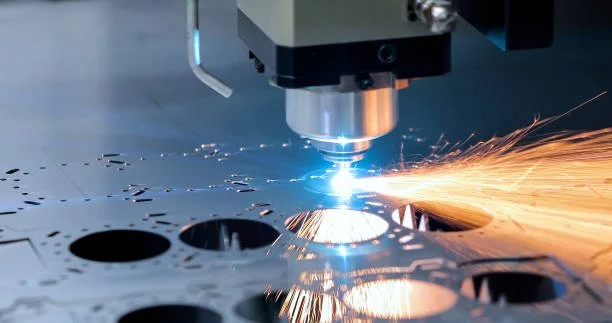
Sell Your Precision CNC Machining Business — Expert M&A Advisory for 5-Axis & Multi-Axis Shops
You have invested decades into mastering micron-level tolerances and high-complexity multi-axis workflows; do not let a generalist business broker value your life’s work as a simple commodity job shop. We bridge the gap between technical shop-floor excellence and sophisticated M&A execution to ensure you capture every dollar of your technical enterprise value.
The 2026 M&A Landscape for Precision CNC Machining
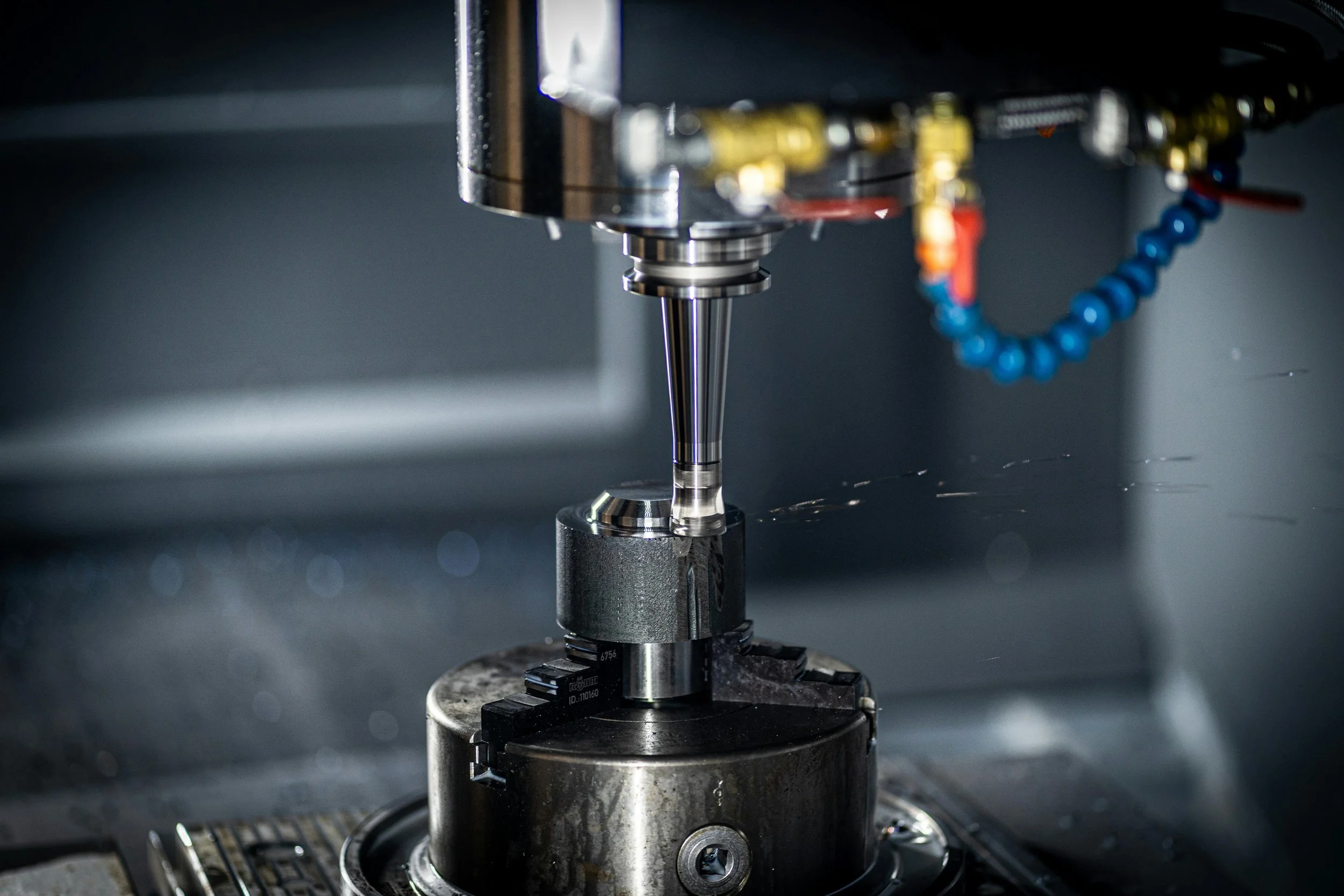
We've sat across the table from PE groups trying to lowball a 5-axis shop at 3x because the broker couldn't explain why a programmed Mazak Integrex cell is worth more than the iron. That doesn't happen on our watch.
At The Precision Firm, we've represented CNC shops running Inconel, Titanium, and Hastelloy — materials that separate real precision manufacturers from the "aluminum and mild steel" crowd. Our team understands that your capability moat isn't just your equipment list. It's your programmed cells, your tribal knowledge, your AS9100D system, and the fact that your customer can't just walk down the street and find another shop holding ±0.0002" on a 5-axis simultaneous part.
In the current 2026 market, buyers are paying 5–7x EBITDA for shops with diversified aerospace and defense revenue, lights-out automation cells, and clean compliance records. The shops that get those multiples are the ones represented by advisors who can translate technical capability into financial leverage.
Automation Integration: Buyers are paying a 20% premium for shops that have successfully integrated robotic machine tending and "Lights-Out" manufacturing capabilities, as this de-risks the current labor shortage.
Deep Backlog Quality: We emphasize your Long-Term Agreements (LTAs) and blanket POs, shifting the valuation focus from historical performance to guaranteed future cash flows.
Specialized Material Expertise: Shops capable of high-tolerance work in "super-alloys" command significantly higher multiples than those working primarily in aluminum or mild steel.
Technical Competencies We Represent in Precision CNC Machining

Aerospace & Defense Machining
Focus Area: High-complexity structural components and engine hardware requiring stringent traceability.
Icon Suggestion: A stylized turbine blade or 5-axis milling head.
Equipment & Labor: 5-Axis machining centers (Mazak, DMG Mori), Wire EDM, and AS9100-certified quality inspectors.
The Buyer Pool: Tier 1 and Tier 2 Aerospace suppliers seeking to verticalize their supply chain or Private Equity "Platform" builds.
Key Certification: AS9100D, NADCAP, and ITAR Registration.

Precision Machining of Advanced Materials
Focus Area: Orthopedic implants, surgical instruments, and micro-machined components.
Icon Suggestion: A precision medical bone screw or Swiss-turning lathe spindle.
Equipment & Labor: Citizen/Star Swiss-turn lathes, Micro-EDM, and "Red-Badge" machinists capable of 0.0001" tolerances.
The Buyer Pool: Global MedTech OEMs and specialized Life Science investment groups.
Key Certification: ISO 13485 and FDA Registration.

Semiconductor & High-Tech Components
Focus Area: Ultra-high purity vacuum components and wafer handling equipment.
Icon Suggestion: A complex semiconductor manifold or cleanroom environment icon.
Equipment & Labor: Horizontal Machining Centers (HMC) with pallet changers, CMM validation labs, and specialized deburring/finishing talent.
The Buyer Pool: Strategic Semiconductor equipment manufacturers (OEMs) looking to secure domestic "on-shored" capacity.
Key Certification: ISO 9001 and Semi-specific quality standards.
Navigating Industry-Specific Compliance in M&A
ITAR & CMMC Cyber-Security Compliance
The Problem: International Traffic in Arms Regulations (ITAR) and the Cybersecurity Maturity Model Certification (CMMC) create significant "Successor Liability" risks. If a buyer discovers a history of non-compliance during due diligence, they will either slash the valuation or walk away to avoid federal penalties.
The Solution: The Precision Firm conducts a pre-market "Compliance Audit." We ensure your Technology Control Plan (TCP) is documented and your NIST SP 800-171 self-assessments are current, presenting you as a "turn-key" compliant acquisition.
AS9100D Quality Management System (QMS) Continuity
The Problem: Many owners are the "center of the wheel" for quality. If the QMS is not institutionalized, buyers fear the certification—and the contracts that depend on it—will vanish once the founder exits.
The Solution: We assist in documenting the "Standard Operating Procedures" (SOPs) and identifying a designated Management Representative early in the process. This proves the QMS is self-sustaining and not dependent on the owner’s presence.
Tier 1 Supplier Re-Certification Risk
The Problem: Change-of-control clauses in Tier 1 contracts (e.g., Boeing, Northrop Grumman) can trigger a mandatory re-certification or "Right of First Refusal" (ROFR), potentially stalling a sale.
The Solution: We analyze your customer contracts for "Assignment" language and help navigate the notification process strategically, ensuring that the buyer feels confident the "Approved Supplier" status will transfer seamlessly post-close.
How We Value a Precision CNC Machining Business

A Precision CNC business is not valued like a standard manufacturer; it commands a "Technical Premium." This premium is the delta between the book value of your equipment and the enterprise value of your "In-Place" capability. We focus on the Adjusted EBITDA (Earnings Before Interest, Taxes, Depreciation, and Amortization) but normalize for heavy CAPEX cycles and owner-related expenses.
Barrier to Entry: The cost to replicate a shop with 10-15 synchronized 5-axis cells and a trained workforce is massive. Buyers pay for the "time-to-market" you have already conquered.
Recurring Contract Revenue: Unlike "Job Shops" that live quote-to-quote, Precision firms often have multi-year programs. This stability significantly reduces the "Weighted Average Cost of Capital" (WACC) for the buyer, leading to a higher multiple.
Asset Base & CAPEX Efficiency: We highlight your recent machine tool investments. A shop with a young fleet (average age under 5 years) signals low deferred CAPEX and reduces a buyer's post-close investment risk, directly supporting a higher multiple.
For a free confidential valuation, visit our Business Valuation page.
For an in-depth look at what manufacturing businesses are selling for across sectors, read our 2026 industrial valuation multiples guide.
Frequently Asked Questions: Selling a Precision CNC Machining Business
-
A: Precision CNC business valuation is calculated using a premium multiple of Adjusted EBITDA, typically 1.5x to 3x higher than general job shops due to specialized CAPEX and technical barriers to entry.
-
A: The impact of AS9100 certification is a direct expansion of the valuation multiple because it de-risks the acquisition for strategic buyers who require high-level quality credentials to maintain Aerospace and Defense contracts.
-
A: Contract Backlog is treated as an asset that justifies the top end of the market multiple by providing concrete evidence of future revenue and reducing the buyer’s uncertainty regarding post-close performance.
-
A: Customer relationships are protected through strict "No-Contact" protocols and the use of anonymous "Teasers" that prevent competitors or clients from knowing the business is for sale until the final stages of due diligence.
-
A: The typical timeline for a precision machining exit is between 6 and 10 months, encompassing the phases of financial normalization, buyer identification, and the rigorous "Quality of Earnings" (QofE) review.
Related Resources
Sell Your Aerospace & Defense Business →
Sell Your Medical Device Manufacturing Business →
Sell Your Semiconductor Tooling Business →
Blog: How AS9100 Certification Impacts Your Manufacturing Business Valuation →
Blog: 5 Mistakes CNC Shop Owners Make When Selling Their Business →
Get Your Free Confidential Business Valuation →
Ready to Maximize the Value of Your Precision CNC Machining Business?
Selling a precision shop requires an advisor who knows the difference between a Haas and a Hermle. At The Precision Firm, we are former operators and engineers who understand the technical complexity of your shop floor.
Don't leave your legacy to a generalist. Let's discuss your technical enterprise value today.